
Discover Hyogo Products in Your Area

As Hyogo Prefecture’s overseas office, one of our missions is to promote and expand Hyogo-made products in the U.S. market. From sweets and traditional crafts to heavy industry, Hyogo is known for a wide range of products! I would like to introduce some items you might find in Asian grocery stores, as well as mechanical products offered by local companies.
-Contents-
Food: Sake
Food: Ibono Ito Noodle
Food: Kobe Beef
Food: Tonkatsu Sauce
Artisan Crafts: Awaji Incense
Artisan Crafts: Miki Knives
Manufacturing: Kawasaki Motorcycle
Hyogo Sake

Hyogo is Japan’s largest sake-producing prefecture, home to more than 60 breweries, making it one of the top exporters of sake to the US. Famous brands, both domestically and internationally, include Hakutsuru, Kiku-Masamune, Kenbishi, Fukuju, Ozeki, Nihonsakari, and many more! Each brewery has its own unique flavor profile and sake category, so you’ll never run out of varieties to try. As more Japanese restaurants open in the US, sake is becoming a familiar and approachable drink, and I’d love to see even more people giving it a try.

Geographically, Hyogo is blessed with premium sake rice, Yamadanishiki, and the famous Miyamizu brewing water, a mineral-rich groundwater sourced from the Rokko Mountains, making the region ideal for sake production. In Nadagogo, Hyogo's historic brewery district, visitors can explore the differences between breweries and enjoy a sake-hopping experience by touring multiple breweries and tasting their fresh offerings.
Beyond its natural resources, Hyogo is known for its brewing craftsmanship. For centuries, the master brewers, nationally famous known as Toji, has passed on its traditional techniques and have also refined over time. Many breweries in Nadagogo still operate as a family businesses, and sake enthusiasts often have their own inherited favorites, saying "we only buy ○○" or "○○ is our house favorite." In this way, taste is passed down through generations on both the brewers’ and the consumers’ sides, and I hope you’ll be part of this tradition as well.
Ibono Ito Noodles

Somen is a classic summer staple across Japan, appreciated for its lightness and ease of preparation on hot days. Among the many regional and national brands, Ibo no Ito (named after the Ibo River in Hyogo; ito means “string”) is one of the most recognized. When I moved to Seattle from Japan, I was surprised by how often I encountered it in local Asian markets—it seems to have become a familiar item here as well.

Ibo no Ito is known for its smooth, delicate texture and a pleasant firmness that holds up. This distinctive quality comes from the brand’s traditional tenobe hand-stretching technique. Through repeated aging, twisting, and stretching of the dough, the gluten fibers align into a dense, rope-like
structure, creating a finish that sets it apart from machine-made somen. The brand also assigns grades to its noodles, making it interesting to compare the differences among them. In 2025, Ibo no Ito was recognized by the International Taste Institute and has maintained its three-star rating, their highest distinction, for 14 consecutive years.

For those who enjoy this well-loved somen, the Ibo no Ito museum in Hyogo offers a deeper look into the craft. Visitors can learn about their meticulous production methods and see the striking “somen curtain,” a popular photo spot.
Kobe Beef


Kobe Beef, named after Hyogo’s capital city of Kobe, is one of the most highly prized types of Wagyu (Japanese-bred beef). It is known for its rich marbling and tender texture that melts in the mouth. Because it is limited even within Japan, authentic Kobe Beef has historically been difficult to find in the U.S. However, as more American meat suppliers have gone through the proper import routes and certification processes, genuine Kobe Beef has gradually become available at select high-end grocery stores and restaurants.
It is often misunderstood that “Kobe Beef” refers to a type of cow. In fact, Kobe Beef is a designation given only to beef that meets the highest grading standards, particularly the balance of meat and fat known as shimofuri (marbling). Most Kobe Beef comes from Tajima cattle, a breed native to Hyogo. In other words, Kobe Beef represents only the top-ranked portion of Tajima cattle that meets strict quality criteria. Therefore, there is no breed called "Kobe Beef."
On restaurant menus, you may see Kobe Beef (神戸ビーフ), Kobe-gyu (神戸牛), and Tajima Beef (但馬牛) listed separately. Both Kobe Beef and Kobe-gyu refer to the highest-certified grade, while Tajima Beef comes from the same cattle but does not meet the requirements to be labeled as Kobe Beef. All three, therefore, originate from the same cattle lineage.
Tonkatsu Sauce (Japanese-style Worcestershire Sauce)

The Kansai region, including Hyogo, Osaka, Kyoto, and Nara, is known for its konamono culture, kona meaning flour. Dishes such as okonomiyaki, takoyaki, and yakisoba are local specialties, and a savory sauce is essential. In Kansai, people tend to be particular about sauces, often using different ones for different dishes, and many households have their own favorites.

Well-known brands include Oliver Sauce and Ikari Sauce, both commonly used for flour-based and fried foods. If you have tried the dishes mentioned above, you may notice that Japanese style Worcestershire sauce is thicker and starchier, making it easier to dip or coat food while eating. Oliver Sauce
is credited with pioneering this thicker style. Their experimental tonkatsu
sauce, created using the idea of adding cornstarch inspired by American sauces, later became a standard in Kansai food culture. Try Oliver Sauce's classic products to experience what the original tonkatsu sauce tasted like, which later styles were based on.
Awaji Incense

Not only sake, but Hyogo is also the largest producer of Japanese incense. Much of it is made on Awaji Island, which is why it is known as Awaji Incense. These high quality products are crafted by Koh-shi, or incense masters. Beyond the technical skills of production, Koh-shi are trained to create incense with careful balance. They calculate smoke volume, fragrance diffusion, and even the way ashes fall. When you try their incense, you may notice how lightly and straight the smoke rises, along with a gentle and long-lasting aroma designed for relaxation.
The image above shows you the Kareki Shrine, which symbolizes Awaji Island as the birthplace of Japanese incense. It enshrines the first documented fragrant wood and is considered the spiritual origin of incense in Japan both historically and culturally. If you ever have the chance to visit Awaji Island, you may notice the aromatic sea breeze especially in the Ei area where many incense workshops and factories are located.
If you prefer to purchase online, Awaji incense is also available as OEM products through the following brands:

Maison Balzac
ORIBE
Miki Knives

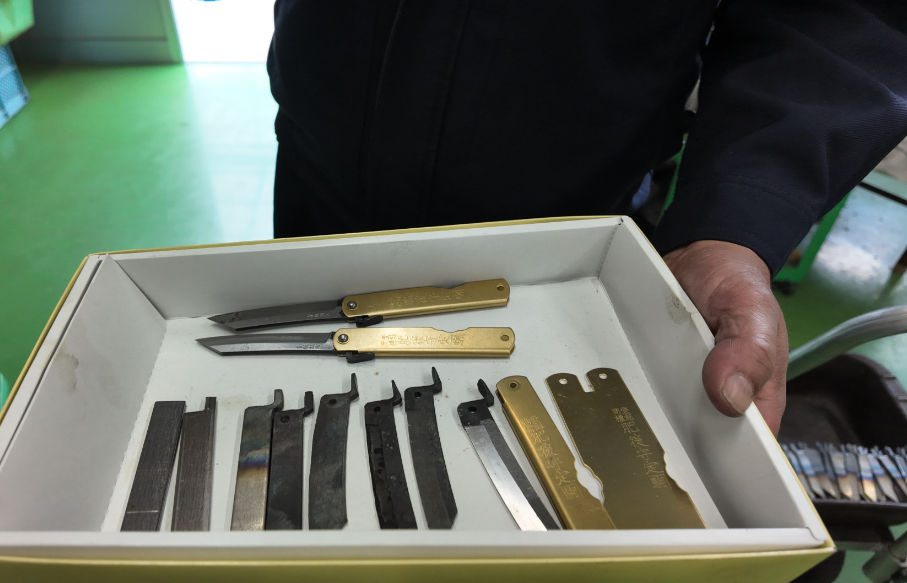
Miki City in Hyogo Prefecture is renowned as Japan’s oldest blacksmithing town, with a history of approximately 400 years. Its metalwork, known as Miki Kanamono, is highly regarded for its craftsmanship, durability, and artisanal tradition.
Among Miki’s metal products, the Higonokami knife is the most iconic. Until around the 1950s, it was an essential everyday tool in Japan—used for sharpening pencils, handicrafts, packing, and even cleaning fish. Children carried it to school, while craftsmen relied on it for practical tasks, valuing its durability and portability. In recent years, it has regained popularity and is now sold internationally. Today, it is often recommended for outdoor activities such as camping or trekking, as well as for general utility use.
Another notable brand that has incorporated modern design elements into its traditional knife-making foundation is Fedeca. The founder has spoken about how his time studying in the United States inspired him, particularly through his interactions with Native American culture and their approach to nature. Fedeca knives are designed to be accessible even to first-time users, allowing them to handle the tool comfortably and engage with nature in a more intentional way.
Fedeca ships internationally. More information can be found on their website:
For a knife-making workshop in Hyogo, check this website:
Kawasaki Motorcycle


Hyogo is home to Kawasaki Heavy Industries, whose motorcycles are recognized worldwide. The brand has built a strong reputation through high quality, distinctive design, and a long history of involvement in motorcycle racing, which has earned it a large international following. The use of advanced technology in engine design, suspension, and electronics continues to attract sport motorcycle enthusiasts, both spectators and riders.
What makes Kawasaki notable is that it is one of the few major heavy industry companies involved in motorcycle manufacturing. The company originally began with shipbuilding, later expanding into railway vehicles and the aerospace industry. Over time, it became a Tier 1 supplier for Boeing, providing key aircraft components.
After World War II, restrictions on military manufacturing led Kawasaki to redirect its engineering expertise toward civilian industries. At a time when motorcycles were in growing demand, the company applied its advanced engineering capabilities to motorcycle development. This background helps explain why Kawasaki engines are widely known for their durability and why their riding performance is often regarded as distinctive compared with other brands.
If you’re interested in purchasing, you can find your nearest dealer here:
*Please understand that, since retail lists are subject to change, we are unable to provide a list of specific store names.


Comments